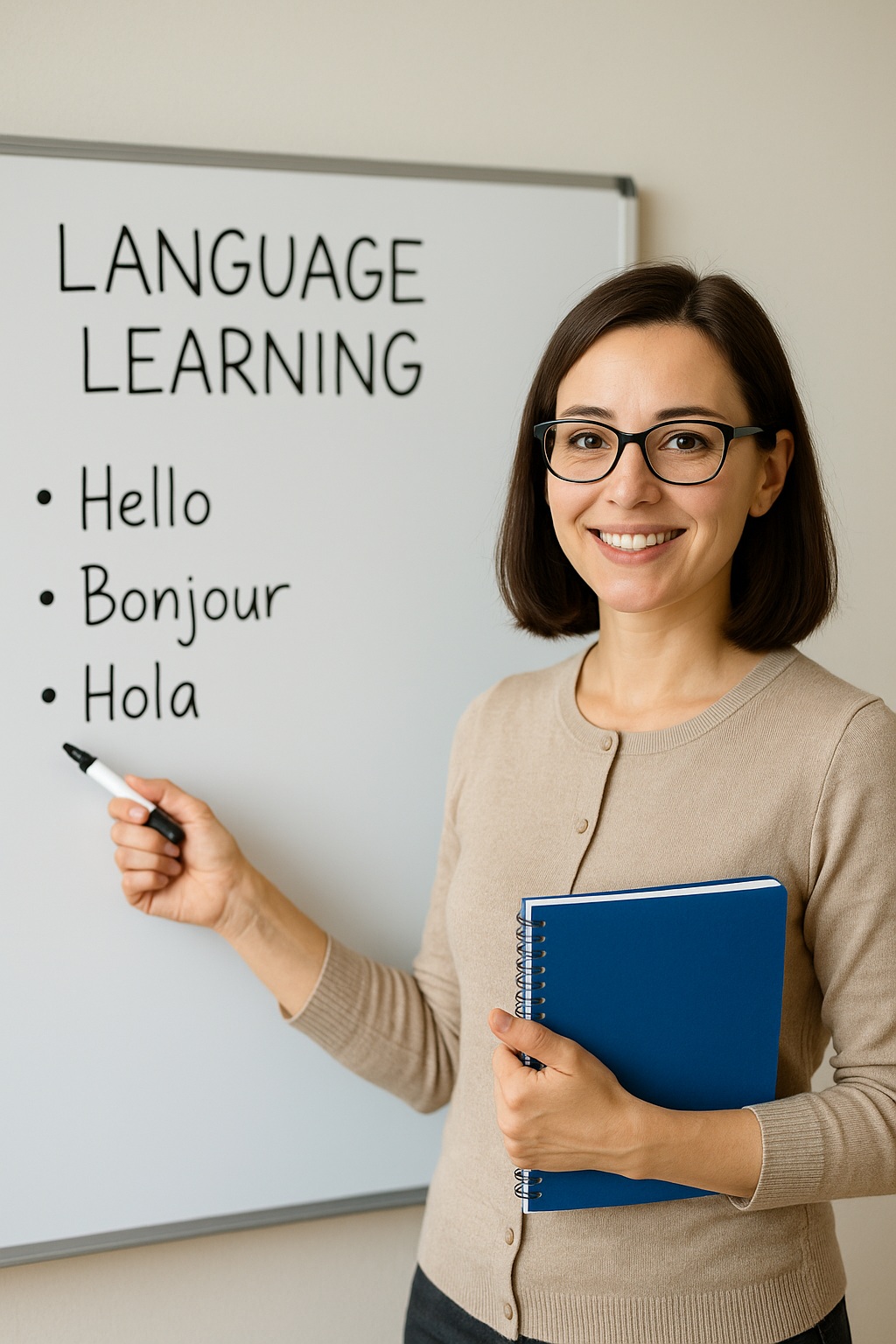
A qualified teacher builds a clear, logical progression—from grammar to vocabulary to conversational skills—ensuring all essential areas are covered. Unlike apps or self-study, which leave much to guesswork, a teacher plans lessons according to your current level and goals.
When learning alone, mistakes often go unnoticed and become ingrained over time. A teacher offers real-time correction on pronunciation, grammar, and usage—saving you from fossilizing errors and boosting confidence.
Teachers not only instruct—they motivate. Studies show that emotional and academic encouragement from teachers significantly increases learners’ confidence, resilience, and enjoyment. A lesson commitment makes you drive progress instead of drifting.
Through interactive scaffolding, teachers guide learners to tasks just beyond their current ability. This concept—derived from Vygotsky—enables learners to achieve more than they could alone, gradually removing support as mastery grows.
Lessons with teachers include role-plays, dialogues, and interactive tasks that mimic real-life conversations—building communication skills in context. Such live practice isn’t easily replicated by apps or solo study.
Teachers monitor your strengths and weaknesses, adjusting content and pace accordingly. Without this, self-learners can stagnate or skip critical areas.
Language is more than words; it’s culture, idioms, and context. Teachers—especially native speakers—provide clarification and cultural context to make your language use feel authentic.
Dedicated lesson time helps you concentrate fully—away from daily distractions. Teachers foster a safe and focused environment where learners are more likely to stay engaged.
On Reddit, learners share similar experiences:
“I’ve tried learning many languages on my own, but the only ones I’ve been able to gain proficiency in are ones that I take actual classes for… I like being held accountable.”
“In the hands of a good teacher … correction as you're going is important to not fossilize any bad habits … I also like being able to learn things I never would have thought to Google on my own.”
An intriguing study highlights that teaching someone else—even an imaginary student—significantly enhances your own retention and understanding. This “protege effect” suggests that explaining concepts, as you do in lessons, strengthens your language skills substantially.
Self-study offers flexibility and resource variety, but often lacks structure, error correction, and speaking opportunities. The most effective combination is:
Such a hybrid model leverages the best of both worlds.
While self-study tools are helpful, teacher-led lessons are essential for:
In the journey to language fluency, a teacher acts as mentor, guide, and cheerleader—helping you progress faster and more confidently.
Would you like tips on choosing the right teacher, or examples of effective lesson structures?